
Savings account
Flexible access for an emergency reserve. The rate is typically variable.
Deposit rates
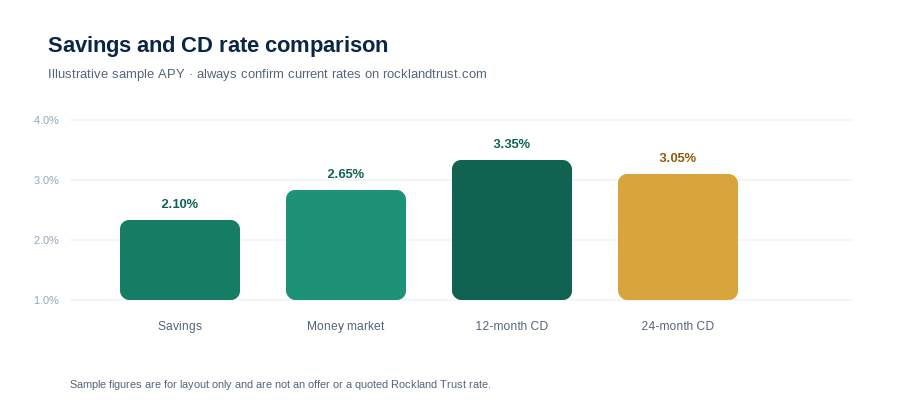
A rate table is only useful when the products are compared on equal terms. Use this page to understand the main deposit categories, how APY works and where to confirm the current Rockland Trust rate.
Rate categories
Match the access you need to the rate you want. The highest rate is not always the right account.
Flexible access for an emergency reserve. The rate is typically variable.
A savings option for larger balances, often with tiered rates and limited transaction rules.
A one-year commitment for money with a known short-term date.
A longer fixed term that may offer a different rate in exchange for less access.
Compare terms
The details below can matter more than a small difference in APY.
| Product | Term | Access | Main trade-off |
|---|---|---|---|
| Savings | Open-ended | Flexible withdrawals | Variable rate |
| Money market | Open-ended | Limited transactions and tier rules | Balance tiers can affect the rate |
| CD | Fixed term | Limited until maturity | Early-withdrawal terms |
| Checking | Open-ended | Everyday spending | Rate is not the main purpose |
| Business savings | Open-ended | Business account access | Business terms and balances |
| Business CD | Fixed term | Limited until maturity | Business cash planning |
Compare properly
Use the same checklist for every product so the comparison is fair.
Use the official Rockland Trust rate page or a branch. Third-party tables may lag behind.
A quoted rate may apply only above a minimum balance or within a promotional period.
CD early-withdrawal rules and money market transaction limits affect real flexibility.
Monthly fees, direct deposit requirements and linked accounts can change the effective return.

The chart on this page is an illustration for layout and comparison. It is not a Rockland Trust rate quote, an offer or a guarantee of future returns.
Rate questions
Current deposit and loan rates are published through the official Rockland Trust site and branch locations. Rates can change before an account is opened.
APY is the annual percentage yield. It includes compounding during the year, so it is a more complete comparison than a simple interest rate.
A certificate of deposit normally fixes the rate for the term. Early withdrawal may reduce earnings or carry a penalty under the account terms.
Yes. Savings and money market rates are typically variable and may change with market conditions or the account tier.
Not automatically. Compare access, minimum balance, term, penalties and whether the account fits the job the money needs to do.
The personal banking page explains account types, and the contact page lists the phone numbers for deposit questions.